



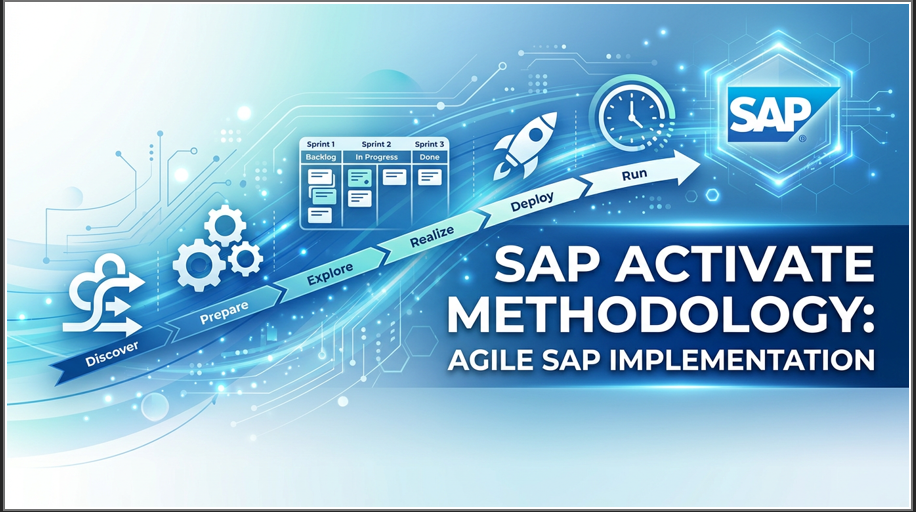
How SAP Activate Makes SAP Implementation More Flexible and Efficient
SAP implementations today are built to handle complex business needs in a structured way. At the same time, businesses keep evolving and project requirements do not always stay fixed from the beginning.
Because of this, teams now look for approaches that allow them to move forward while still adapting along the way. SAP Activate fits well into this way of working.
What SAP Activate Means in Practice
SAP Activate is the standard approach used for implementations like SAP S/4HANA.
In simple terms, it gives teams a starting point instead of asking them to build everything from zero. There are ready-to-use processes, a clear direction to follow, and a way to move step by step rather than all at once.
This makes the work easier to manage, especially in larger projects.
How It Supports Agile Working
In many projects today, teams prefer to see progress early rather than waiting until everything is completed.
SAP Activate allows that by breaking work into smaller parts. Something is built, reviewed, and then improved. This cycle continues throughout the project.
Because of this, feedback comes in naturally and changes can be handled without too much disruption.
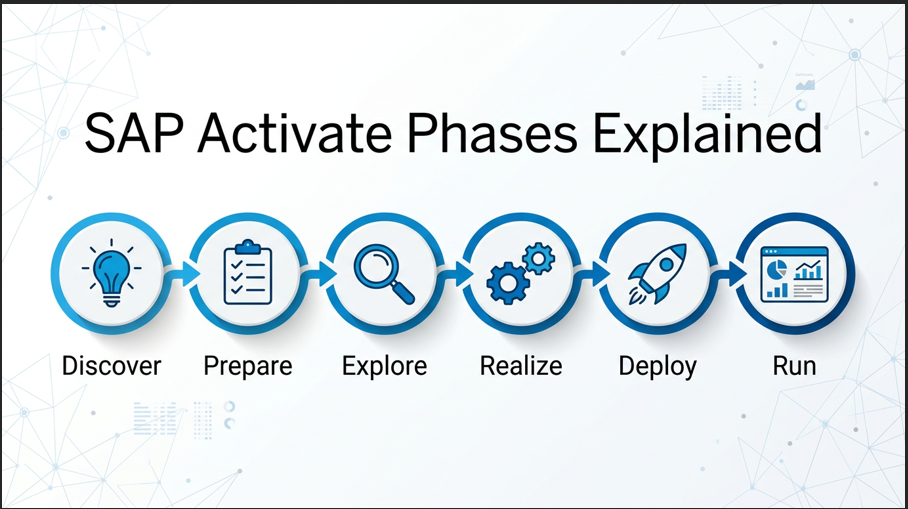
A Quick Look at the Phases
Discover
This is the initial stage where teams look at business goals, understand what they want to achieve, and define the overall scope.
Prepare
At this stage, the project is set up. Teams are aligned, roles are defined, and the initial plan is created so everyone knows how to move forward.
Explore
This is where things get more practical. Through fit-to-standard workshops, teams compare business needs with SAP's standard processes and decide what fits best.
Realize
Here, the actual build happens. Work is done in smaller cycles with regular testing and feedback to make sure everything is on track.
Deploy
This phase focuses on getting ready to go live. Final testing, user training, and system readiness all come together here.
Run
After going live, the focus shifts to improvement. Teams continue to optimize and make sure the system delivers long-term value.
These phases help in keeping things clear, but they do not restrict how teams work.
Usually the initial stages are about understanding the business and setting direction. After that, teams start validating processes and building the system. Towards the end, the focus shifts to going live and then improving further.
The useful part is that teams do not have to wait until the last stage to make changes. They can adjust things as they move ahead.
What Feels Different During Execution
One thing that stands out is how discussions happen.
Instead of only working with long documents, teams often use workshops to directly connect business needs with SAP processes. This makes conversations more practical.
Since work is done in smaller cycles, progress becomes visible quite early. It is easier to understand what is working and what needs attention.
Why Many Teams Are Moving Towards This
For organizations working on SAP S/4HANA, this approach brings a good balance.
It allows teams to move faster while still staying aligned with standard SAP processes. At the same time, it avoids adding unnecessary complexity.
Another advantage is that it works across different project sizes depending on how teams want to use it.
Final Thought
SAP implementation is an important journey for any organization.
With SAP Activate, the journey becomes more structured while still allowing flexibility. Teams can move step by step, stay aligned, and keep improving as the project progresses.
Over time, this makes the overall experience more manageable and more effective.