



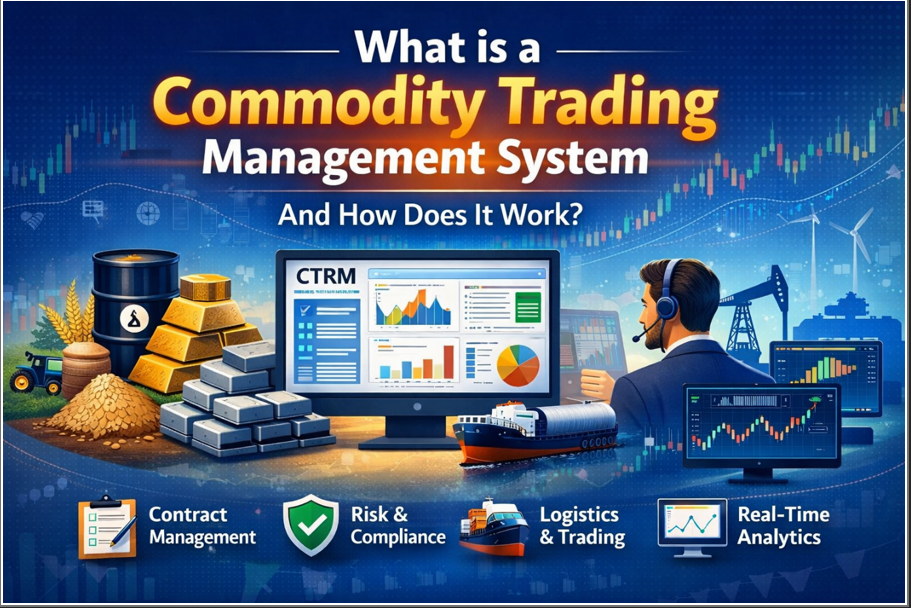
An efficient commodity trading system functions as the foundation of contemporary physical commodity trading. Knowing what a SAP commodity trading & risk management system is and how it works is crucial for businesses involved in the trading of metals, energy, agricultural products and different physical commodities.
What is a SAP Commodity Management System?
A commodity management system, commonly called a CTRM software, is special software for trading in commodities designed to manage the entire lifecycle of a trade — from initial deal management to the final settlement and accounting.
The commodity trading management system includes a variety of functions, such as the management of commodity contracts and risk management software capabilities, commodity logistics management, and reporting on profit and loss. Top solutions, such as SAP commodity trading & risk management, provide complete platforms that cover every aspect of trading physical commodities.
Contemporary platforms like SAP CTRM and SAP commodity management are integrated with ERP-connected trading infrastructure, resulting in seamless data flows and real-time trading analytics.
Who Uses Commodity Trading Management Systems?
Many organizations depend on commodity trading management system solutions. Energy trading management system users include oil and gas companies, electricity producers, and renewable energy traders. Metals trading management companies use them for non-ferrous, ferrous, precious metals, and steel products.
Financial institutions that trade commodity derivatives rely on commodity trading management system capabilities for managing derivatives and exposure. Both consumers and producers of commodities utilize SAP commodity trading & risk management to control price risk and hedge management requirements.
Why Businesses Need a Commodity Trading Management System
Comprehensive Trade Lifecycle Management
Without a commodity trading management system, businesses struggle to track purchase and sales contracts, monitor shipment tracking, and coordinate settlement processes efficiently. A solid platform like SAP CTRM centralizes all deal management data, eliminating data silos and reducing errors.
Risk Management and Compliance
Risk management software in a commodity trading system safeguards businesses against market instability — calculating price risk management, credit risk analysis, and monitoring exposure management continuously. Solutions like SAP commodity trading & risk management include hedge management systems with mark-to-market valuation and comprehensive risk reports.
Operational Efficiency
A commodity trading management system automates manual processes — handling trade invoicing, inventory management, and commodity logistics. When SAP commodity management connects to accounting systems, it automatically updates commodity trading accounts, decreasing reconciliation time and improving accuracy.
How a Commodity Trading Management System Works
Deal Capture and Contract Management
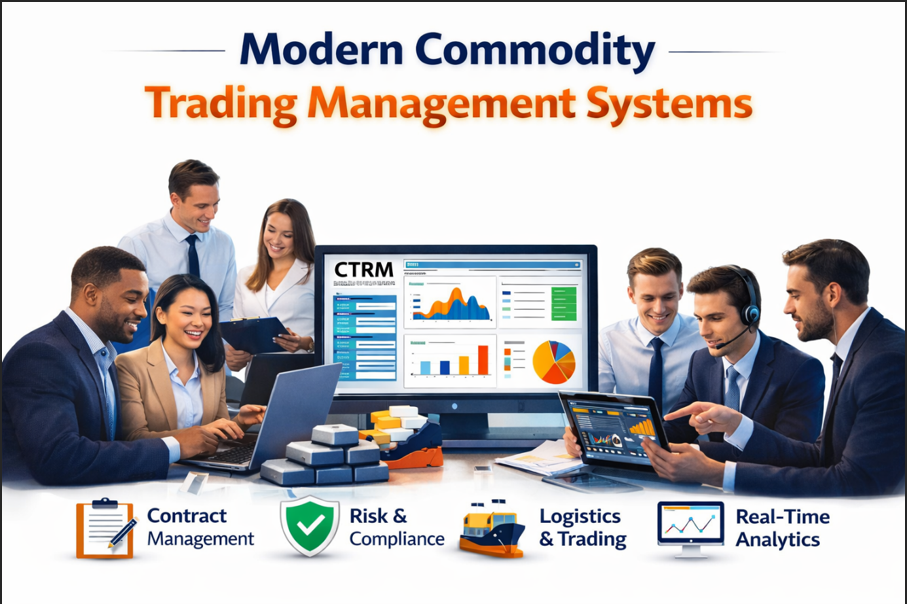
The process begins with commodity deal management. Traders enter sales and purchase contracts recording all essential terms — prices, quantities, delivery locations, and timing. Modern software like SAP CTRM offers templates for common contract types, speeding up deal recording and ensuring uniformity.
Position Management and Valuation
When contracts are entered, the CTRM system constantly checks positions, integrating all open contracts to give real-time insight into physical commodity trading positions. Through mark-to-market valuation, the software calculates unrealized losses and gains, updating valuations regularly as market prices shift.
Logistics and Inventory Tracking
A commodity trading management system manages logistics functions such as tracking deliveries and managing inventory — overseeing vessel movements, warehouse stocks, and delivery schedules. Utilizing SAP commodity management, businesses gain visibility over the entire supply chain.
Risk Analysis and Reporting
The system continuously monitors exposure management throughout all transactions, detecting areas of concentration, calculating value at risk (VaR), and flagging policy violations. With SAP CTRM, the software generates credit risk analysis, hedge management reports, and real-time trading analytics.
Settlement and Accounting
When contracts mature, the commodity trading management system handles the settlement process — creating trade invoicing documents, reconciling physical deliveries with contracts, and processing payments. With SAP commodity trading & risk management integration, transactions are recorded directly into the general ledger.
Key Features of Modern Commodity Trading Management Systems
The most popular platforms incorporate derivatives trading management alongside physical commodity trading features, handling complicated deal structures like swaps, options, and basis trading. The ERP-integrated approach, especially using the SAP commodity management system, provides seamless data flows that eliminate duplicate entries and reconciliation issues.
When to Implement a Commodity Trading Management System
Businesses should consider setting up a commodity trading management system when trading volume exceeds spreadsheet management capabilities. Companies under regulatory scrutiny needing audit trails and compliance reporting benefit most from solutions like SAP CTRM.
Visit our LinkedIn profile to get in touch with our team. Sapocom Technologies
Top 5 FAQs
1. What's the distinction between a CTRM system and regular trading software?
A CTRM system is specifically designed for physical commodity trading needs — logistical management, shipment tracking, and inventory management — which normal trading software cannot handle. Solutions such as SAP commodity trading & risk management combine financial and physical aspects, including derivatives trading management features that conventional platforms lack.
2. What is the cost of a commodity trading management system?
Pricing differs significantly depending on functionality and deployment strategy. Small to mid-sized businesses could invest $50,000–$500,000 annually, while large companies implementing SAP commodity trading & risk management could invest millions for a complete implementation.
3. Can a commodity trading management system connect to existing ERP systems?
Yes. Modern solutions like SAP commodity management offer native integration to SAP ERP software, integrating with financial modules, inventory systems, and procurement systems for seamless data sharing and real-time analytics.
4. What kinds of commodities can be managed using a CTRM system?
A full commodity management platform supports oil and gas, renewable energy, power, base and precious metals, grains, softs, and livestock. Solutions such as SAP CTRM provide customizable platforms for virtually every commodity trading activity.
5. How long does it take to implement a commodity trading management system?
Implementation timeframes vary from 3 to 18 months. Simple implementations can be completed in 3–6 months. Comprehensive projects involving SAP commodity management and SAP commodity trading & risk management with data migration and ERP integration generally take 12–18 months.